Everything You Need to Know About Climate Zones
Introduction to Climate Zones
Travel requires extensive preparation, so I created a tips-and-tricks post and an airline status guide to help you have the trip of your dreams.
That guide didn’t cover how to prepare for the weather, even though weather plays a big part in trip planning and can literally make or break a trip.
The obvious answer may be to use your favorite weather app before the trip to help with packing and during the trip for daily excursions. But have you ever wondered why the weather is what it is?
We have climate to thank for this. Climate isn’t just some random phenomenon that happens however it wants. There’s science behind it all, and while I don’t claim to be an expert on every meteorological concept, I can better explain why climate is what it is in different parts of the world so that you can plan your trip for the best seasons.
Köppen Classification System
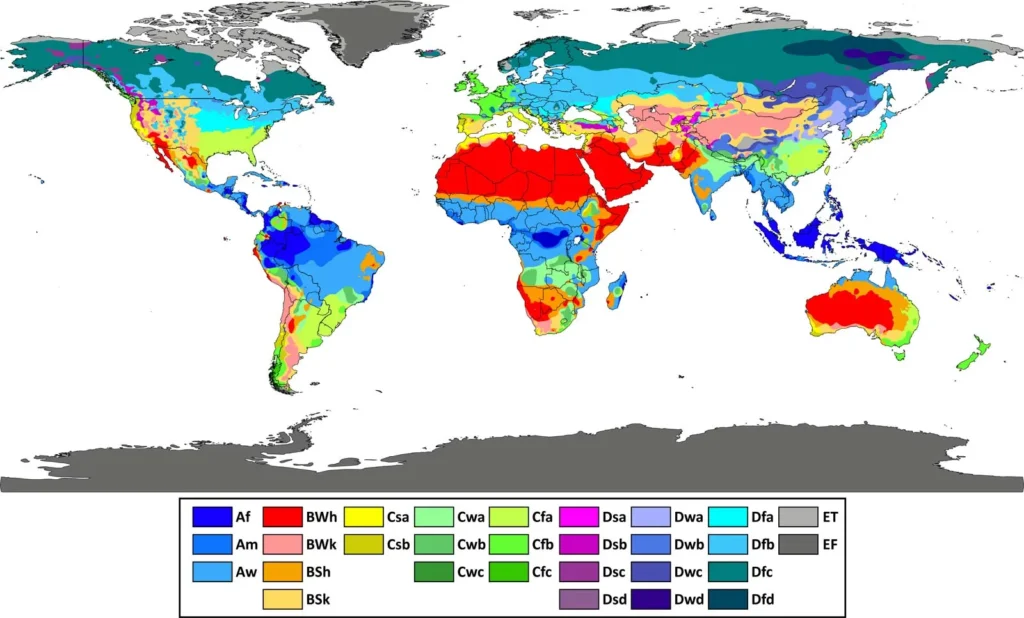
The map above is the Köppen climate classification system, and I included a map of the world showing Earth’s five primary zones, which we’ll cover in this post.
While several other classification systems exist, and even within the one we are discussing, there are discrepancies about what cities belong where, it’s still the most well-known and widely used. So after this post, you’ll be an expert on it, which is my goal.
It’s extremely easy to understand. I’ll provide a quick reference summary, and then we will dive into each type and provide example cities.
Summary Climate Table
1st Letter (Uppercase) | 2nd Letter (lowercase unless B & E) | 3rd Letter (lowercase) |
|---|---|---|
A (Tropical) | f (fully humid) | N/A |
B (Dry) | S (Steppe) | h (hot) |
C (Temperate) | w (winter dry) | a (hot summer) |
D (Continental) | w (winter dry) | a (hot summer) |
E (Polar) | T (Tundra) | N/A |
First Letter: Major Climate Group
A (Tropical): Hot and humid year-round, with every month averaging above 18°C (64°F).
B (Arid/Semi-Arid): Dry Regions With little to no precipitation
C (Temperate): Mild, usually mid-latitude climates with warm summers and mild winters.
D (Continental): Areas on vast land masses with distinct variations between summers and winters
E (Polar): Extremely cold climates where the warmest month averages below 10°C (50°F).
Note: Some climate classification systems add the letter H for “Highland!” These are mountainous areas where elevation, rather than latitude, controls the climate.
Second Letter: Precipitation or Aridity (lowercase except for Group B and E)
For Groups A, C, and D:
f (fully humid): Wet all year with no distinct dry season.
m (monsoon): Short dry season followed by a heavy monsoon wet season.
s (summer dry): Dry season occurs during the warm summer months.
w (winter dry): Dry season occurs during the coOler winter months
For Group B (capitalized):
S (Steppe): Semi-arid grassland
W (Desert): True desert with extreme aridity
For Group E (capitalized):
T (Tundra): Tundra climate where at least one month averages above freezing
F (Frost/Ice Cap): Perpetual ice where every month is below freezing
Third Letter: Summer or Winter Temperature
A (Hot Summer): Warmest month average is above 22°C (72°F)
B (Warm Summer): Warmest month average is below 22°C (72°F), but at least four months average above 10°C (50°F)
C (Cool Summer): Fewer than four months average above 10°C (50°F)
D (Very Cool Winter): The coldest winter month is extremely frigid, dropping below −38°C (−36°F)
For Group B:
h (Hot): Annual average temperature is above 18°C (64°F)
k (Cold): Annual average temperature is below 18°C (64°F), but winters can freeze

So now you know how to use the Köppen climate classification system. If I, for example, give you the letters:
– Cfc, you know I’m referring to a temperate zone with no distinct dry season with a cool summer.
– Dfa, you know I’m referring to a hot summer continental zone with no distinct dry season.
or
– BWh, you know I’m referring to a hot desert area.
Now let’s talk about each main climate group and provide examples of each one. We will go through each climate zone, so there’s absolutely no confusion.
Group A Climate Types: The Tropical Zone (4 types)
Tropical climates feature year-round high temperatures, with every month averaging at least 18ºC (64ºF). As you can see from the table, the climate types in this group are:
Af: Tropical Rainforest
In these climate types, all 12 months average at least 60 mm (2.4 in) of measurable precipitation. In other words, these areas have no distinct dry season. Cities with this climate type include Kuala Lumpur, Malaysia, Colombo, Sri Lanka, and Singapore.
Am: Tropical Monsoon
This is basically the same as the tropical rainforest, but it has a short dry season in which at least one month averages at or above the precipitation threshold. Cities with this climate type include Jakarta, Indonesia, Rio de Janeiro, Brazil, and San Jose, Costa Rica.
The precipitation threshold is defined as 100 – (Total Annual Precipitation in mm)/25)
Aw: Tropical Savanna with dry winters
This climate type is exactly what it sounds like. It has a winter dry season with at least one month in that dry season averaging less precipitation than the above threshold. Cities with this climate type include Bangkok, Thailand, Lagos, Nigeria, and Caracas, Venezuela.
As: Tropical Savanna with dry summers
This is the same as the above climate type, except the dry season is summer instead of winter. This climate type is found in cities such as Mombasa, Kenya; Cape Coast, Ghana; and Chennai, India.
Group B Climate Types: The Arid Zone (4 types)
BSh: Hot Semi-Arid Steppe
These are semi-dry grassland borders of hot deserts that are warm all year with short, erratic rainy seasons. This is the main climate zone of Los Angeles, California, though some argue for Csa; other cities with this climate type include Honolulu, Hawaii (which does not receive enough rainfall to be considered tropical), Marrakesh, Morocco, and Nicosia, Cyprus.
BSk: Cold Semi-Arid Steppe
Think of these as semi-dry plains with highly variable prairie weather, warm summers, and snowy winters. Cities with this climate type include Denver, Colorado, Zaragoza, Spain, and Tehran, Iran.
BWh: Hot Desert
These are scorching, hyper-arid regions with virtually no rainfall and extremely high summer temperatures. Cities include Cairo, Egypt, Phoenix, Arizona, and Dubai, United Arab Emirates.
BWk: Cold Desert
These regions are arid and dry year-round, but have cold, freezing winters due to high altitude or high latitude. Examples include Damascus, Syria, Ciudad Juarez, Mexico, and Ashgabat, Turkmenistan.

Group C Climate Types: The Temperate (Mild) Zone (9 types)
Cfa (Humid Subtropical)
Areas in this zone have hot, humid summers with regular thunderstorms and mild winters. Cities with this climate type include Atlanta, Georgia, Dallas, Texas, and Tokyo, Japan.
Cfb (Oceanic/Marine West Coast)
These areas have mild summers, cool but not freezing winters, and persistent dampness or drizzle. Think of cities like London, England, Melbourne, Australia, and Vancouver, Canada.
Cfc (Subpolar Oceanic)
Cities here have cool, brief summers and long, damp, overcast but relatively mild winters, including places like Reykjavik, Iceland, Punta Arenas, Chile, and Tórshavn, Faroe Islands (Denmark).
Cwa (Monsoon-Influenced Humid Subtropical)
These climate types have wet, hot summers contrasted with dry, mild winters. Hong Kong, Hanoi, Vietnam, and Lusaka, Zambia.
Cwb (Subtropical Highland)
Mexico City, Mexico; Nairobi, Kenya; and Johannesburg, South Africa feature this climate type, characterized by mild, spring-like weather year-round with dry winters; typical of high-altitude tropics.
Cwc (Cold Subtropical Highland)
Places in Bolivia and Tibet feature this climate type, characterized by high-altitude, short cool summers and dry, cold winters.
Csa (Hot-Summer Mediterranean)
This climate type is characterized by hot, dry, sunny summers alongside mild, rainy winters. Think of cities like Rome, Italy, Perth, Australia, and Los Angeles, California (though some argue this city does not receive enough rain for this category).
Csb (Warm-Summer Mediterranean)
This zone is characterized by cool, dry summers and mild, rainy winters; heavily tempered by the ocean. Cities in this zone include San Francisco, California, Seattle, Washington, and Porto, Portugal.
Csc (Cold-Summer Mediterranean)
Few places have this specific climate type. It is characterized by short, cool, dry summers and cold, snowy winters; a rare mountain/coastal hybrid. Places with this climate type include Balmaceda, Chile, and Haleakalā Summit, Hawaii.
Group D Climate Types: The Continental Zone (12 types)
Dfa (Hot-Summer Humid Continental)
These cities feature a stark contrast between severe, snowy winters and hot, sweltering, humid summers. Chicago, Illinois, and Seoul, South Korea, are major cities with this climate type.
Dfb (Warm-Summer Humid Continental)
These areas have long, freezing winters alongside pleasant, mild, and wet summers. Examples include Toronto, Canada, and Moscow, Russia.
Dfc (Subarctic)
Think of a city like Anchorage, Alaska when you think of this climate type. It features extremely long, brutal winters and brief, cool summers.
Dfd (Extremely Cold Subarctic)
This climate type has severe, hyper-continental winters where temperatures plummet past -50°C and short summers. Think of Yakutsk, Russia, when thinking of this climate type.
Dwa (Monsoon-Influenced Hot Humid Continental)
Beijing, China, and Pyongyang, North Korea, fit this climate type well. This climate type features fierce, dry winters paired with hot, torrential, monsoon-influenced summers.
Dwb (Monsoon-Influenced Warm Humid Continental)
Vladivostok, Russia, is an example of this climate type, featuring freezing, dry winters and warm, wet summers.
Dwc (Monsoon-Influenced Subarctic)
Not many cities fall in this climate, but it is described as having bitterly cold, completely dry winters and short, wet summers.
Dwd (Monsoon-Influenced Extremely Cold Subarctic)
Cities here have the most extreme seasonal temperature swings on Earth: hyper-cold, dry winters.
Dsa (Hot-Summer Continental)
Places here have freezing, wet winters and hot, bone-dry summers.
Dsb (Warm-Summer Continental)
Places here have cold, snowy winters and warm, highly arid summers.
Dsc (Mediterranean-Influenced Subarctic)
Places here have long, freezing winters with a brief, dry, and cool summer window.
Dsd (Mediterranean-Influenced Extremely Cold Subarctic)
Places here have hyper-frigid, snow-heavy winters and very short, dry summers, warm enough to keep them out of the polar category.
Group E Climate Types: The Polar Zone (2 types)
ET (Tundra)
These deserts have severe winters and a brief summer thaw that melts enough snow for mosses and lichens to grow.
EF (Ice Cap)
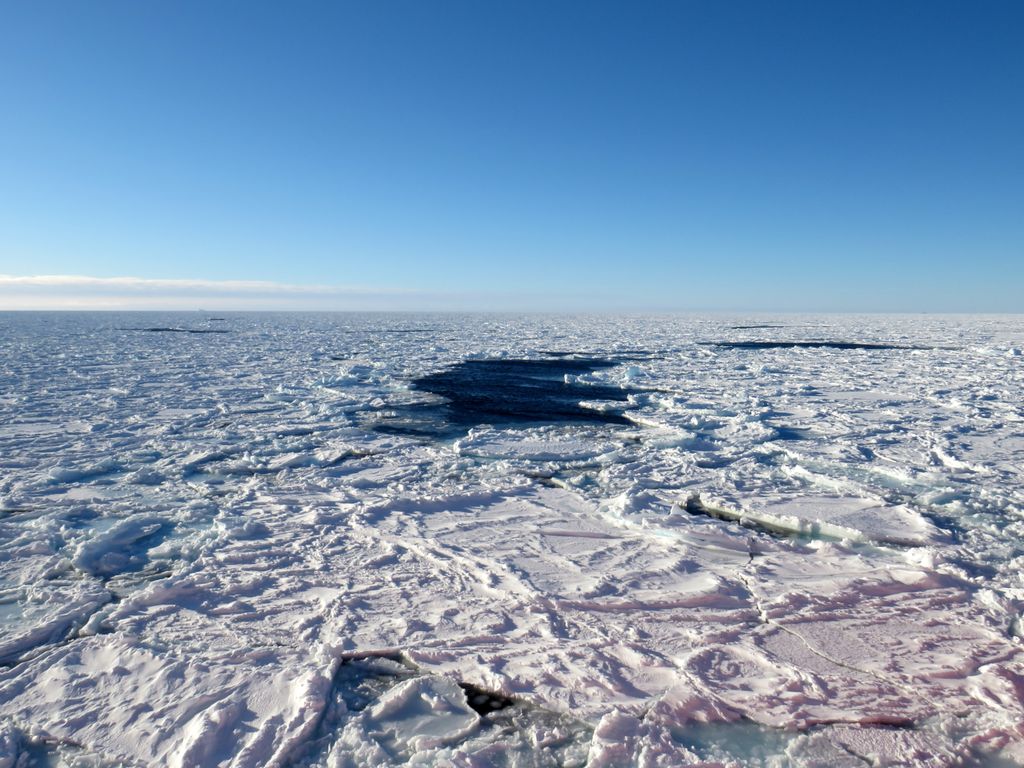
These are areas of the world with perpetual frost, where temperatures never rise above freezing, leaving the landscape permanently buried under ice.
How can understanding climate improve your trip planning and therefore your travel experience?
You now know the 31 climate types as defined by the Köppen Climate Classification system. Now you have a better understanding of why cities have certain weather patterns, and hopefully that will help your trip planning.
You can now visit cities during your preferred season to experience the weather patterns you want. That is the purpose of this blog post. Weather is a big part of what makes or breaks the experience had on a trip. Of course, you can and should always use your weather app, but now you have the knowledge needed to plan ahead. You can use this guide to know when the best time is to visit a city to experience whatever weather you prefer.
I prefer dry, warm climates, which is why I’ve explored a lot in the Group B climate type. You can read more in my Middle East section if you’re interested.
If you have any questions, leave them in the comments or contact me, and I’ll get back to you as soon as possible!
Thanks for reading, and I’ll see you in the next post!